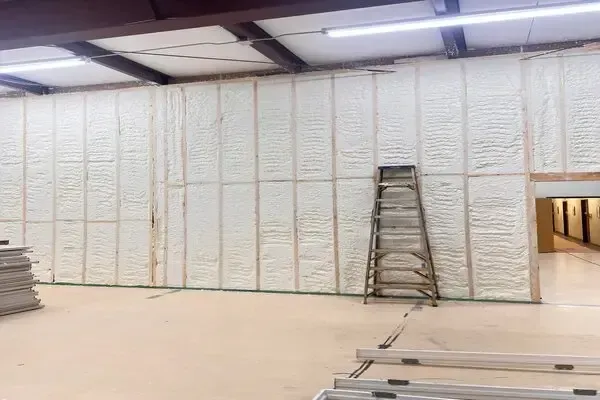
Closed Cell Spray Foam Installation for Basements and Exterior Walls in Texas Homes
Closed-cell spray foam doesn't mess around when it comes to protecting your home. While other insulation materials make promises they can't keep, closed-cell foam delivers the kind of performance that actually shows up in your utility bills and comfort levels.
At PCC Spray Foam, we've watched closed-cell spray foam installations transform problem basements and vulnerable exterior walls into fortress-like barriers that laugh at moisture, heat, and energy waste.
After 8+ years of professional work across North Texas, we know exactly where basement insulation and exterior wall protection make the biggest difference in your home's performance and your wallet's happiness.
What Makes Closed-Cell Spray Foam Different
Closed-cell spray foam packs a serious punch with its dense, rigid structure that delivers R-6 to R-7 per inch of thermal resistance. That's nearly double what open-cell foam provides and triple what fiberglass batts claim on their best day. The secret lies in those tightly packed cells that trap gas molecules, creating an impermeable moisture barrier while adding genuine structural strength to your walls.
This isn't fluffy insulation that squishes when you touch it. Closed-cell foam turns into a rock-solid shield that water, air, and pests can't penetrate. The material's density means it won't settle, sag, or lose effectiveness over decades, unlike traditional insulation types that give up after a few years.
Why Basements Need Closed Cell Protection
Texas homeowners' basement insulation faces unique challenges that make closed-cell spray foam the only smart choice. Below-grade spaces constantly battle ground moisture trying to seep through concrete foundations, creating perfect conditions for mold growth and structural damage.
Traditional insulation materials actually absorb this moisture, turning your basement into a science experiment you didn't sign up for. Closed-cell foam creates an impenetrable vapor barrier that stops moisture dead in its tracks, while the rigid foam structure reinforces foundation walls against soil pressure.
Your HVAC system stops working overtime to dehumidify a losing battle, energy costs drop noticeably, and that musty basement smell disappears like it never existed in the first place.
Exterior Walls Get Serious Upgrade
Exterior wall spray foam transforms your home's thermal envelope from Swiss cheese into a sealed fortress. Those exterior walls face brutal Texas summers where 100°F+ heat tries to cook your living space while winter cold snaps attack from the opposite direction.
Closed-cell insulation on exterior walls stops this thermal transfer while simultaneously blocking the air infiltration that drives up energy bills and creates uncomfortable drafts. The high R-value means you need less thickness to achieve superior performance compared to traditional materials.
Installation between studs before drywall goes up creates a continuous barrier without gaps around electrical boxes, pipes, or other penetrations that leave conventional insulation looking like it tried but didn't quite make it.
How Does Closed Cell Foam Stop Moisture Problems?
Here's where closed-cell spray foam really shows off its capabilities. The moisture barrier properties prevent water vapor transmission, protecting your home from the humidity that breeds mold, damages drywall, and ruins insulation effectiveness.
In basement applications, this means ground moisture stays outside where it belongs instead of creeping into your living space through foundation walls. For exterior walls, the foam stops condensation from forming when temperature differences create moisture where warm meets cold. Think of it as a waterproof jacket for your home's structure.
The closed cell structure doesn't absorb water like fiberglass, won't provide food for mold like cellulose, and maintains full insulation performance even in humid Texas conditions that make other materials throw in the towel.
Installation Process That Actually Matters
Professional closed-cell spray foam installation requires precision that separates amateurs from experts, real quick. The two-part chemical mixture must hit exact ratios and proper temperatures, or you get foam that underperforms, shrinks, or fails prematurely.
Our certified technicians at PCC Spray Foam prep surfaces thoroughly because foam needs clean substrates for proper adhesion. We apply closed-cell foam in controlled passes, building thickness gradually to prevent overheating while ensuring complete coverage. The material expands just enough to fill spaces without creating excessive pressure that could bow walls.
Within 24 hours, the foam fully cures into that rigid barrier ready to protect your home for 30+ years. Sloppy installation leaves gaps, creates weak spots, and wastes your money on underperforming insulation that never delivers promised results.
Real Energy Savings You Can Bank On
Let's talk numbers because closed-cell spray foam backs up its reputation with measurable results. Exterior wall insulation with closed-cell foam reduces heating and cooling costs by 25-35% compared to homes with traditional insulation types. Basement insulation adds another 10-20% savings by eliminating the ground-level energy drain that forces HVAC systems into constant operation.
A typical North Texas home spending $3,000 annually on energy costs saves $750-1,350 every year after professional installation. The investment pays itself back within 5-7 years, then keeps delivering savings for decades. Y
our air conditioner runs shorter cycles, your heater kicks on less frequently, and every room maintains comfortable temperatures without fighting losing battles against outdoor conditions trying to invade your living space.
Get Professional Closed Cell Spray Foam Installation Today
Closed cell spray foam Texas installations demand expertise that only comes from years of hands-on experience and commitment to quality workmanship.
At PCC Spray Foam, we bring 8+ years of professional installations to every project, ensuring your basement insulation or exterior wall upgrade delivers maximum performance and lasting value. Our bilingual team (Se habla español) serves homeowners throughout North Texas with free consultations, transparent pricing, and installations that exceed expectations.
Contact us today at (682) 239-6710 to schedule your assessment and discover why smart homeowners choose closed cell spray foam for serious moisture protection and unbeatable energy efficiency in their Texas homes.
Frequently Asked Questions
Q: What makes closed cell spray foam better than open cell for basements?
A: Closed cell foam provides a complete moisture barrier that prevents water vapor transmission, essential for below-grade spaces facing constant ground moisture. Open cell foam is vapor permeable and would absorb moisture, leading to mold growth and insulation failure in basement applications.
Q: Can closed cell spray foam really add structural strength to walls?
A: Yes, closed cell foam's rigid structure adds measurable racking strength to walls, typically increasing shear strength by 200-300%. This structural reinforcement helps walls resist lateral forces and provides additional support to the building envelope.
Q: How much does closed cell spray foam cost for exterior walls?
A: Closed cell foam typically costs $2.50-$3.25 per board foot installed. For exterior walls, expect $3-5 per square foot depending on thickness needed, which is higher than traditional insulation but delivers superior performance and 30+ year lifespan.
Q: Will closed cell foam prevent mold in my basement?
A: Yes, the impermeable moisture barrier stops water vapor that causes mold growth. By eliminating moisture penetration and maintaining dry conditions, closed cell foam creates an environment where mold cannot establish or spread.
Q: Does closed cell spray foam work in extreme Texas heat?
A: Absolutely, closed cell foam excels in hot climates with R-values that block radiant heat transfer. The material maintains full performance at temperatures exceeding 180°F, making it ideal for Texas exterior walls facing intense summer sun.
